

The World According To Warshaw
December 2, 2025
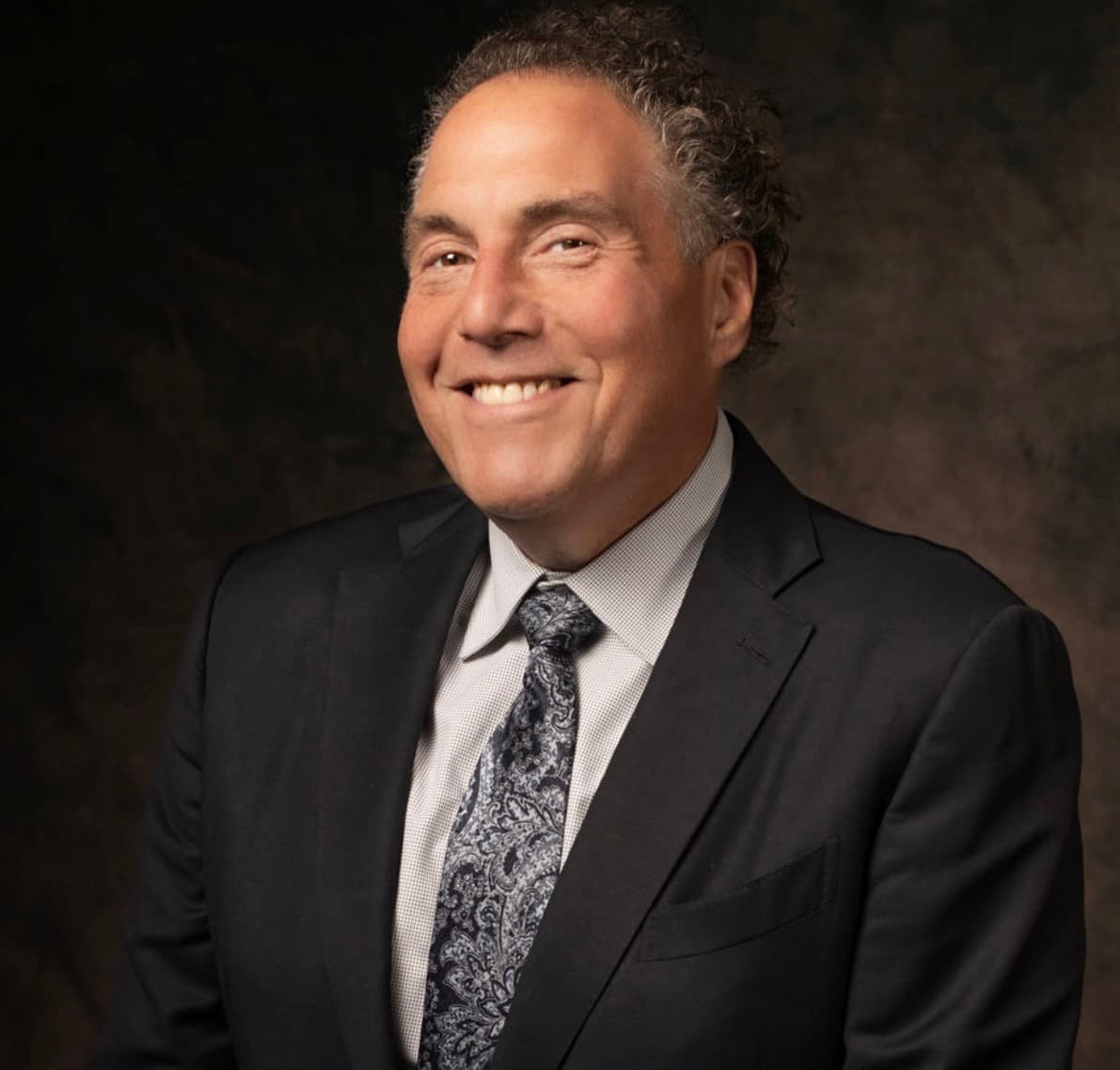
There’s no more talked-about owner in broadcast radio right now than Connoisseur Media’s Jeff Warshaw. He’s buying, he’s selling, he’s suing, he’s being sued. For a guy who’s been in and around the radio biz for decades now, Jeff is something of a mystery to many broadcasters at a time when the industry’s power base is changing.
Aside from EMF scarfing up radio stations to strengthen their Christian powerhouse networks, the buy/sell activity in radio these past several years has been somewhere between tepid and stagnant. And now President Trump is sending out mixed signals from FCC commish Carr about the relaxation of ownership limits. What’s a corporate magnate to do?
If you’re Warshaw, it’s all systems go on the new shape and scope of Connoisseur. After adding Alpha, he’s bought Bonneville’s cluster in San Francisco from Bonneville, while selling his holdings in Bakersfield as well as a gaggle of stations in Missouri. He clearly has a vision for what the future of the company will be, and he’s making that happen with this series of purchases and sales.
In a recent article, Jerry Del Colliano wrote about all the recent Connoisseur acquisitions as well as the divestitures. He contends Warshaw is structuring the sales of his existing properties “to make it virtually impossible for a potential buyer not to buy his unwanted stations.”
According to Jerry, Jeff is innovating “the future of selling radio stations, specifically for small-to-mid-sized markets.” So, put a pin in that thought and I’ll come back to that topic later in this post.
In the meantime, Jeff Warshaw is rapidly becoming the most interesting player in radio by virtue of this recent buy/sell activity, combined with his long-range goals. He also may be the least understood of the current group of Radio Ink‘s so-called “40 Most Powerful.”
We have worked for Connoisseur and I’ve had numerous conversations with Jeff—some expansive—over the years. He was part of the group that attended our very first CEO tour of CES back in 2017. I’m not going to tell you I deeply understand the man and what makes him tick. But I do know he’s outspoken, emotional, and passionate about radio and his company.
While some may not take him seriously or openly question the wisdom of what he’s doing, they should make judgments at their own risk. That’s because Jeff isn’t just an uber-fan of broadcast radio—its past, present, and future. He also loves and believes in the business. (That’s in contrast to some executives whose pragmatic “whatever it takes” mindset has ended up reducing and compromising the radio broadcasting industry’s efficacy and long-term value.)
He reminds me of a baseball pitcher who consistently throws 100 mph fastballs, but without complete control of his pitches. Some in radio are afraid of him because—to continue the baseball analogy—he has the tendency to get a little wild. I think Warshaw secretly enjoys this effect he has on some people.
More to the point, Jeff doesn’t just believe in the business—and the medium—but his philosophy incorporates doing things “the right way”—personality, community involvement, station/company culture, and other attributes often thought of these days as being hopelessly “old school” by some, and out of fashion by others.
His current legal wrangling with the Soros organization regarding the leadership of Audacy only adds to Jeff’s legendary and highly combustible persona. In much the same way radio’s rank-and-file discussed and debated the motivations behind Mel Karmazin’s machinations thirty or so years ago, Jeff Warshaw’s wheeling and dealing is becoming the talk of the radio industry today.
Most people in the business concur the business is in the midst of flux, turbulence, transition. But there’s little-to-no consensus about the shape it may take next year or by 2030. Warshaw is one of the players actively carving out his role in this tumultuous process.
In a recent story in Inside Radio Connoisseur’s Next Era: Jeff Warshaw Builds A Portfolio Designed To Evolve, the unconventional owner reveals facets of his mindset, including the recent rash of transactions:
“As soon as we close one deal, I’m looking to see what’s the next one so that I can create value. There is no finish line.”
Regarding the cluster in Missouri he sold to Carter Media, a local company that’s owned radio stations in the region for nearly a half century, Warshaw noted:
“In Moberly, MO, what is best for listeners, clients and employees is to have somebody that is a better owner than me for those markets.”
Warshaw realizes that retaining markets like this would result in mediocre service to local listeners, advertisers, and community leaders. He understands these stations are better off owned by broadcasters invested in the local market or region.
And the kicker is that after a prolonged period where it seemed like the only radio station buyers were Christian companies, the industry has clearly entered a new phase where the reshaping process is only beginning. As Warshaw observed for Inside Radio:
“There’s going to be spin-offs, swaps, and acquisitions as we put together a group of assets that we think is in our best interest. It’s a challenging environment. But we plan to be opportunistic driven by the fact that there are a lot of companies that have upside down balance sheets.”
So, what does all this mean when we pull back our collective perspective and consider how these changes in “who owns what?” impacts the radio industry at large? While I am not even close to being an expert in station valuations, some of the recent prices revealed for stations in large, medium, and small markets got my attention.
Consider Connoisseur bought Bonneville’s troika of stations in the Bay Area, ranked by many as the fourth largest market in the U.S., for $10 million combined. The trio is KBLX, KUFX, and the legendary KOIT. The latter is regularly one of the highest-rated stations in the San Francisco/San Jose rating book.
So, $10 mil for the lot of them? What does this suggest about cash flow, multiples, and the state of play in the American radio industry today?
And then there’s that Connoisseur sale to Carter in Missouri. Count ’em up, all 14 radio stations.
Sale price? $400,000.
A simple math exercise tells you that nets out to under $30K a station. If you just consider the FMs, it comes out to 9 stations—under $45K each.
Now as Warshaw notes, Moberly, Missouri, is the core market for this group of stations, with a regional population of under 14,000. That’s around the same size as the well-heeled city of Mill Valley, California, just over the Golden Gate Bridge in Marin County north of the city of San Francisco.If you think about an expenditure of a modest $400K for an entire group of stations, consider the value of the average house in the U.S. is just over a half million dollars. (In Moberly, it’s just $155,000). So, a cluster of radio stations for less money than a four-bedroom colonial? Apparently in 2025, this is now radio reality.
But enough math. Let’s look at the bigger picture, and what both Del Colliano and Warshaw may be saying to us. The current level of radio station valuation hasn’t been this cheap since the 1960s, more than six decades ago.
I remember when Mel Karmazin, the CEO of Infinity Broadcasting bought KRTH from the Beasleys in 1993 for the unprecedented price of $110 million. At the time, it was the most anyone had ever paid for a single radio station. The purchase gave Infinity a powerful L.A. “duopoly” as KRTH joined KROQ in the nation’s second largest market. Obviously, a lot has happened in the radio business during the past thirty or so years.
So, here’s my question: Would you rather buy a summer cottage or a retirement condo in Florida OR would you rather become a small market station owner?
Having worked in the industry for more than half a century, I’ve met many along the way who dreamed of one day owning a station, but were unfortunately priced out. Not so in 2025 when many of us could no doubt scrape up the funds to become an owner/operator in one of thousands of hamlets in America. And apparently, many current captains of small market radio would cut a pretty attractive deal if it could get them out from under.
Over the last couple decades, many former radio pros have been highly critical—and that’s putting it mildly—of the current regime of broadcast radio owners in the U.S. And their ire has been understandable. Many once-great radio brands have been decimated by budget cutbacks, the vagaries of private equity operators, and just poor decision-making.
But to be fair, other owners have operated in good faith while getting caught up in the disruptive forces that have sabotaged so many media brands across the spectrum. Looking at the sorry state of legacy players—newspapers, local television, movie theaters—many have suffered the same disappointing fate as so many radio magnates.
Still, many strong radio pros feel a sense of deep disappointment and even a sense of betrayal over how far the industry has fallen. Many are highly vocal about current owners, feeling a sense of hurt over radio’s steep losses, especially perceptually among American consumers.
If this sounds like you, maybe the current economics finally work for you. Perhaps you CAN afford to become a station owner without incurring a mountain of debt. And thus, you could be in position to show what YOU would do with a station of your own.
That new format no one will try that you know will work. Or a low commercial load, a markedly expanded playlist, or live and local personalities around the clock. Or any other innovative approach you’ve been thinking about. This might be your time.
And you never know. Your theories might come to fruition. And you might, in fact, ring in the next chapter of broadcast radio’s amazing history in America.
Who among us would be surprised if Merriam-Webster’s “word of the year” for 2025 turns out to be “affordability?” Politicians from both sides of the aisle are evoking it with regularity. It is resonating because of the millions of Americans feel they’ve been price out of life’s basic: home ownership, health care, a college education, and beyond.
Thanks to the current cycle of inflation, so many staples—from groceries to vacations to cars—are more expensive today than they have been in years, priced out of so many budgets.
But not radio stations. They have never been more affordable. And while the Telecommunications Act of 1996 ushered in a three decade period of deregulation and consolidation, falling station prices might mean the little guy or gal might be able to participate in radio ownership on a larger scale than we’ve seen in years.
If Jeff Warshaw is listening, is there a way to work with your brokers to structure your station unloading process with an eye toward selling some of these distressed properties to fledgling first-time owners? You’d still get your money and you’d enable young broadcast entrepreneurs to become stewards of these neglected stations. You might even help pave the way toward a resuscitated radio industry that would do Connoisseur and others a whole lot of good.
What a deal.
Originally published at Jacob’s Media.
Recent News
Deidra Lieberman Named Regional Manager of National Sales for West Coast
February 6, 2026
KUFO Returns to Portland After 15 Years
February 4, 2026

Sommer Frisk Named Market Manager for Palm Springs and Regional Manager for Anchorage and Salt Lake City
February 2, 2026
Bret Michaels Addresses Poison Anniversary Tour Money Dispute on Chaz & AJ in the Morning
January 28, 2026
Emily Harlan Rises To Music Director At San Jose’s ‘Bay Country.’
January 23, 2026

Connoisseur Media, Audiospace Team Up for Mass Digital Revamp
January 15, 2026